
Alexander Tovborg
THOMAS
Chapter 1
Curated by Kristian Vistrup Madsen
28 March – 31 May
Villa Atrata
26 rue du Pont, 86260 Angles-sur-l’Anglin
Thomas is a two-part exhibition by Danish artist Alexander Tovborg. The first chapter is on view in Angles-sur-l’Anglin, while the second is presented in Paris. For his first solo exhibition in France, Alexander Tovborg has created a new series of icons, accompanied by texts by Kristian Vistrup Madsen.
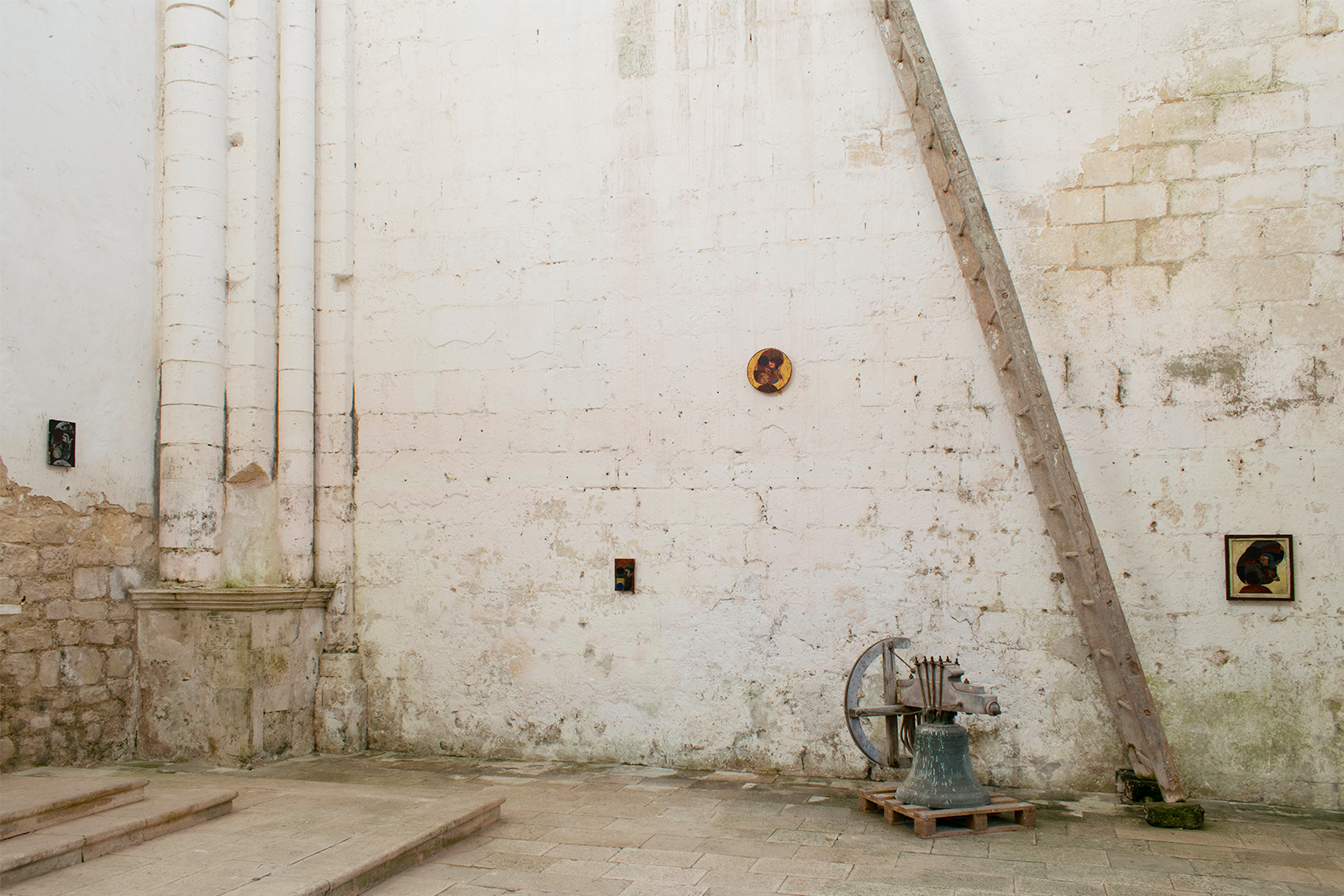
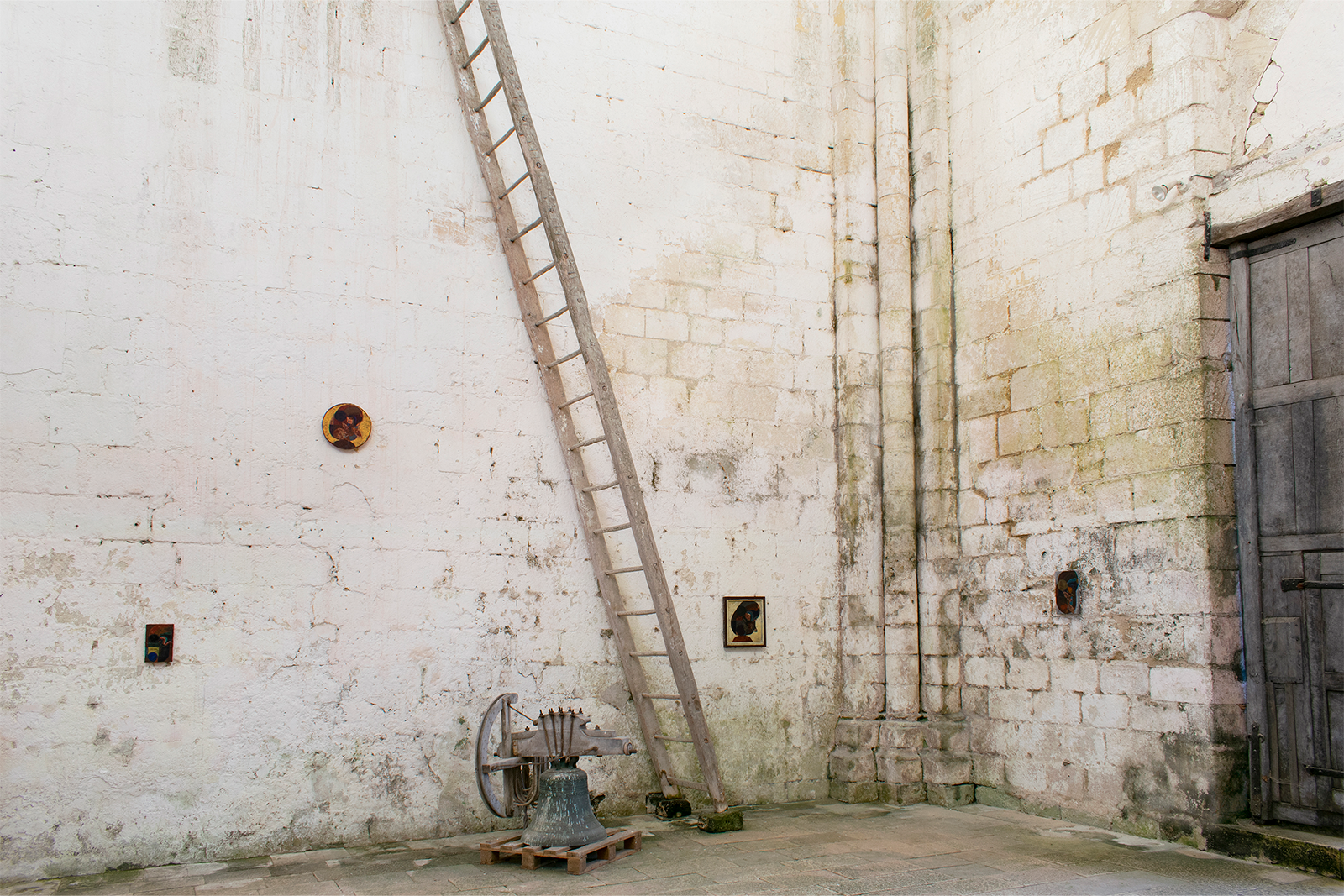
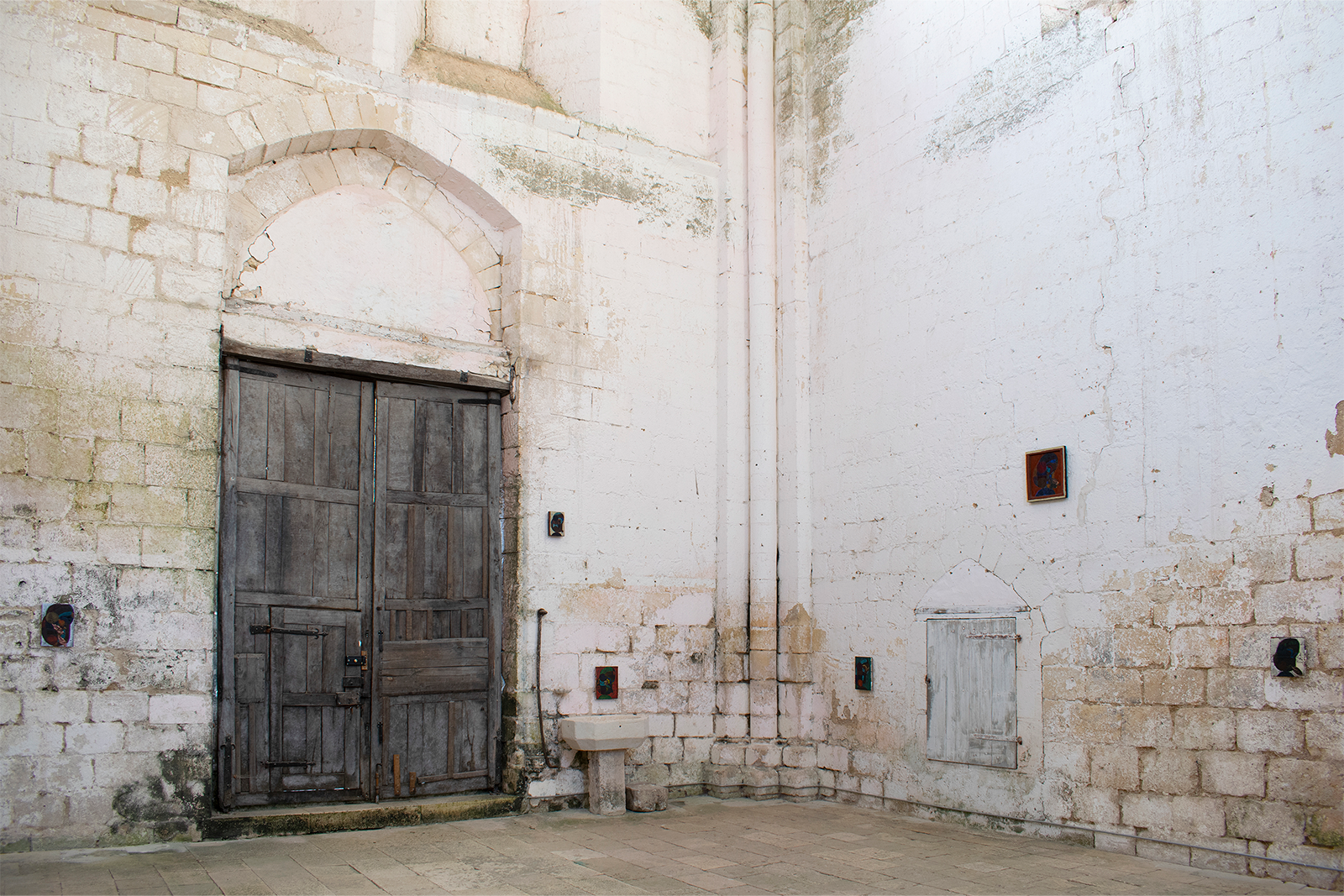
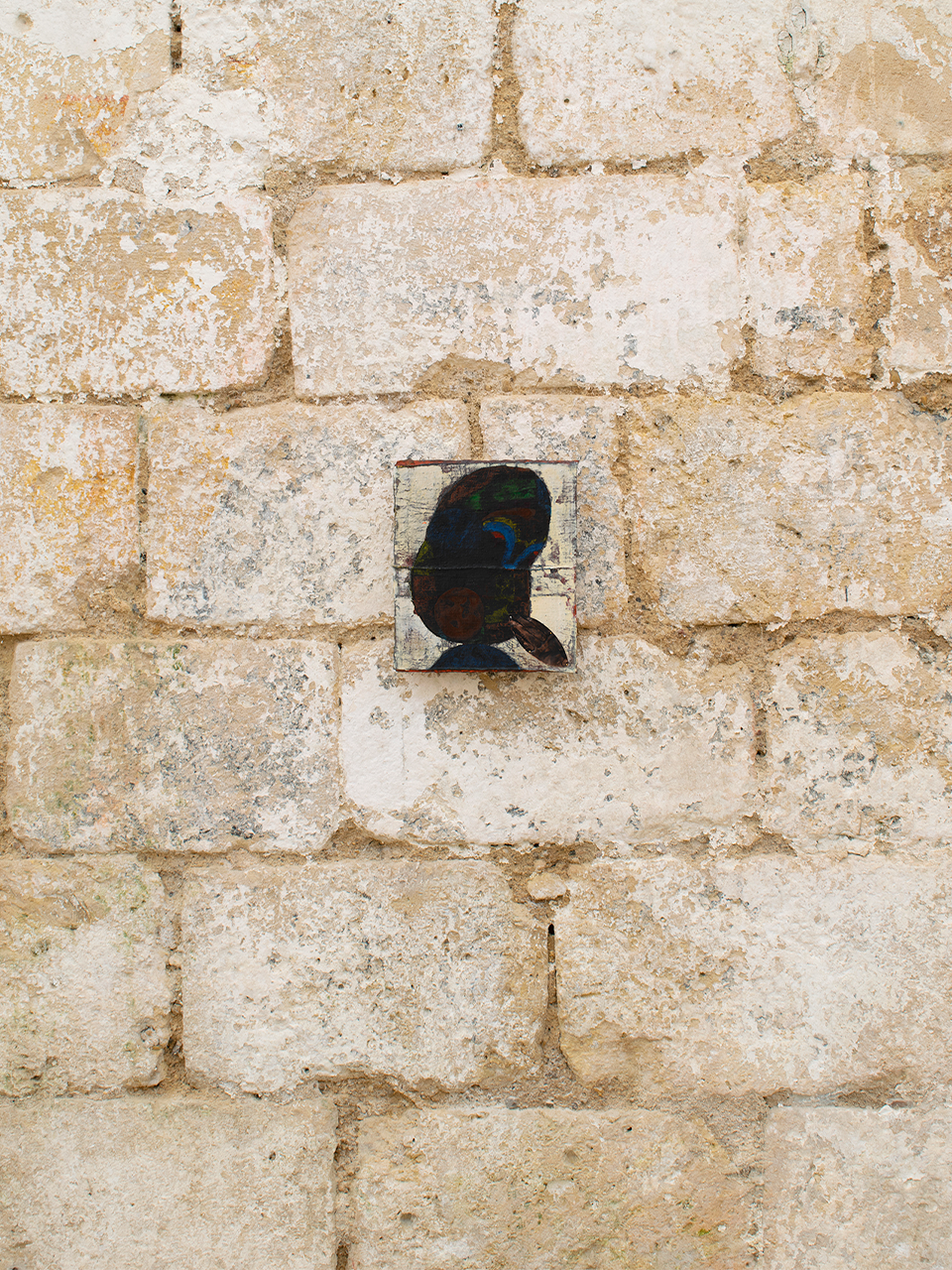
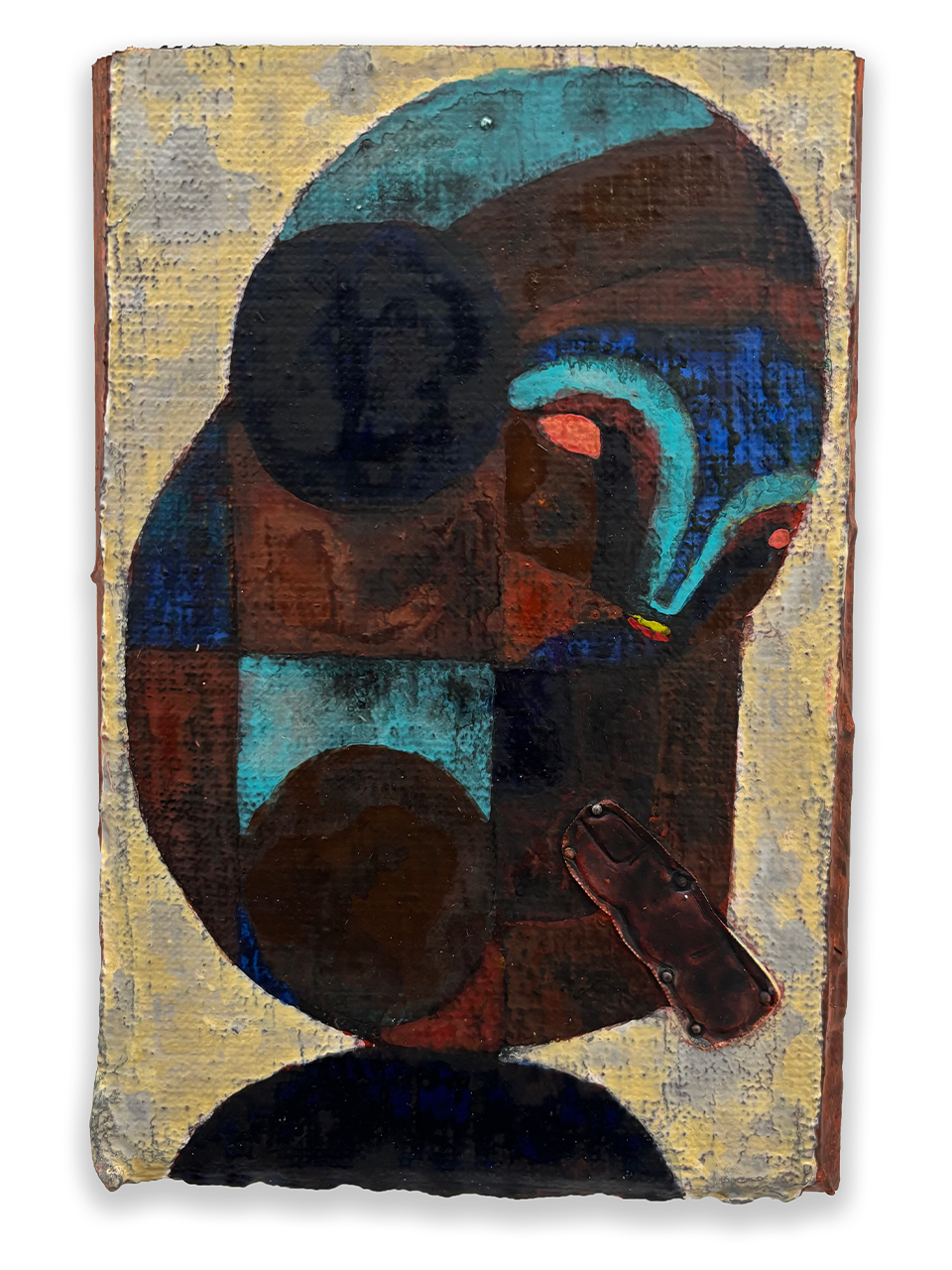
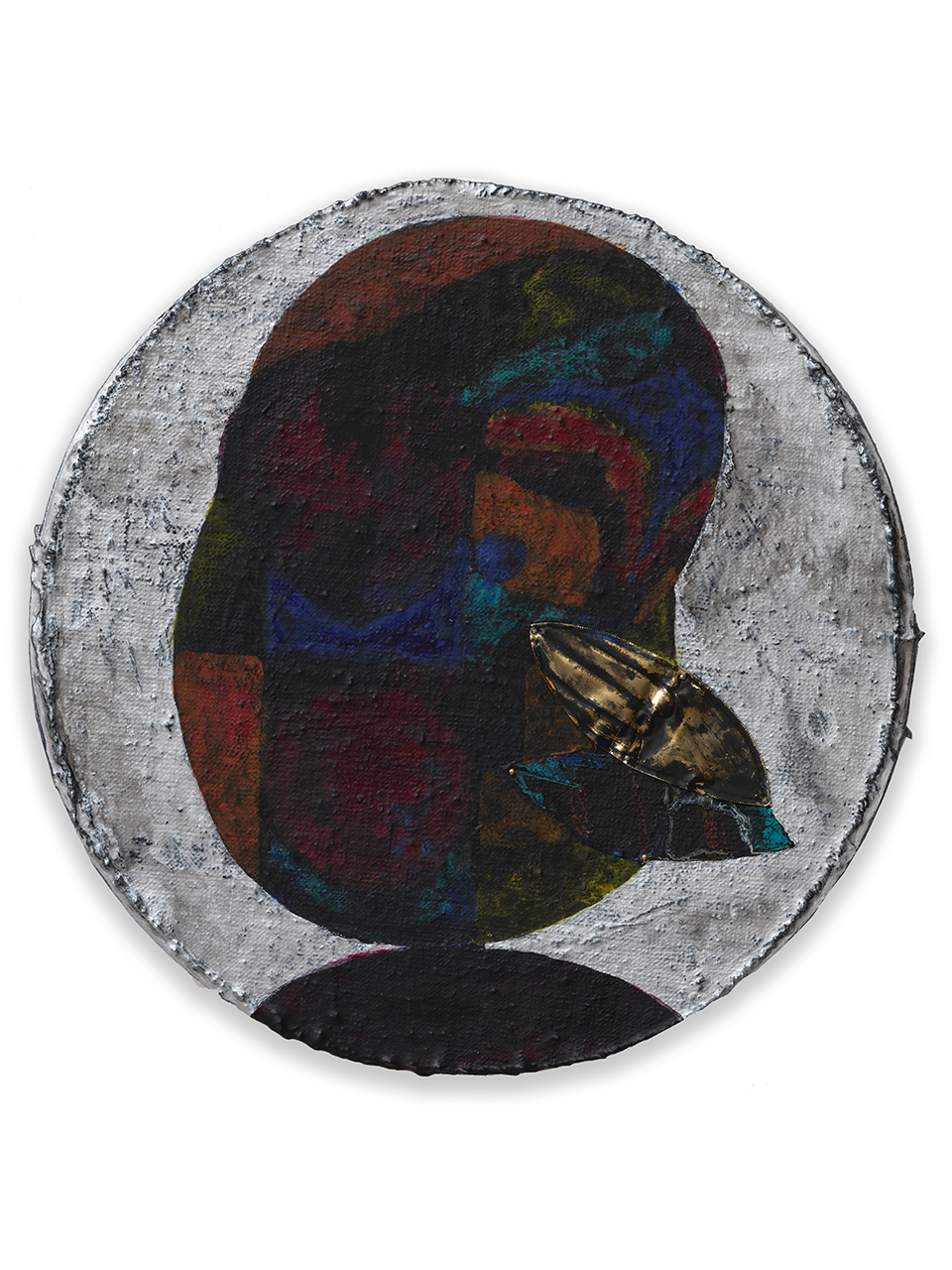
It had been important to me that Alexander’s pictures be shown as a series. I would tell people that the seriality in his work has been too often overlooked as a key component of what and how the work is. What I mean by that has to do with the pictorial logic of icons. That they are not painted, but written, like prayers. That they do not communicate but impact by sustained exposure. They are restrained, formulaic and repetitive, and yet full because both artist and viewer have been, and will be, continually, emptied into them. The simplicity they offer is not like that known from protestantism that asks for faith to be projected inwards, but manifests rather with the heightened intensity of a single, all-encompassing sensation.
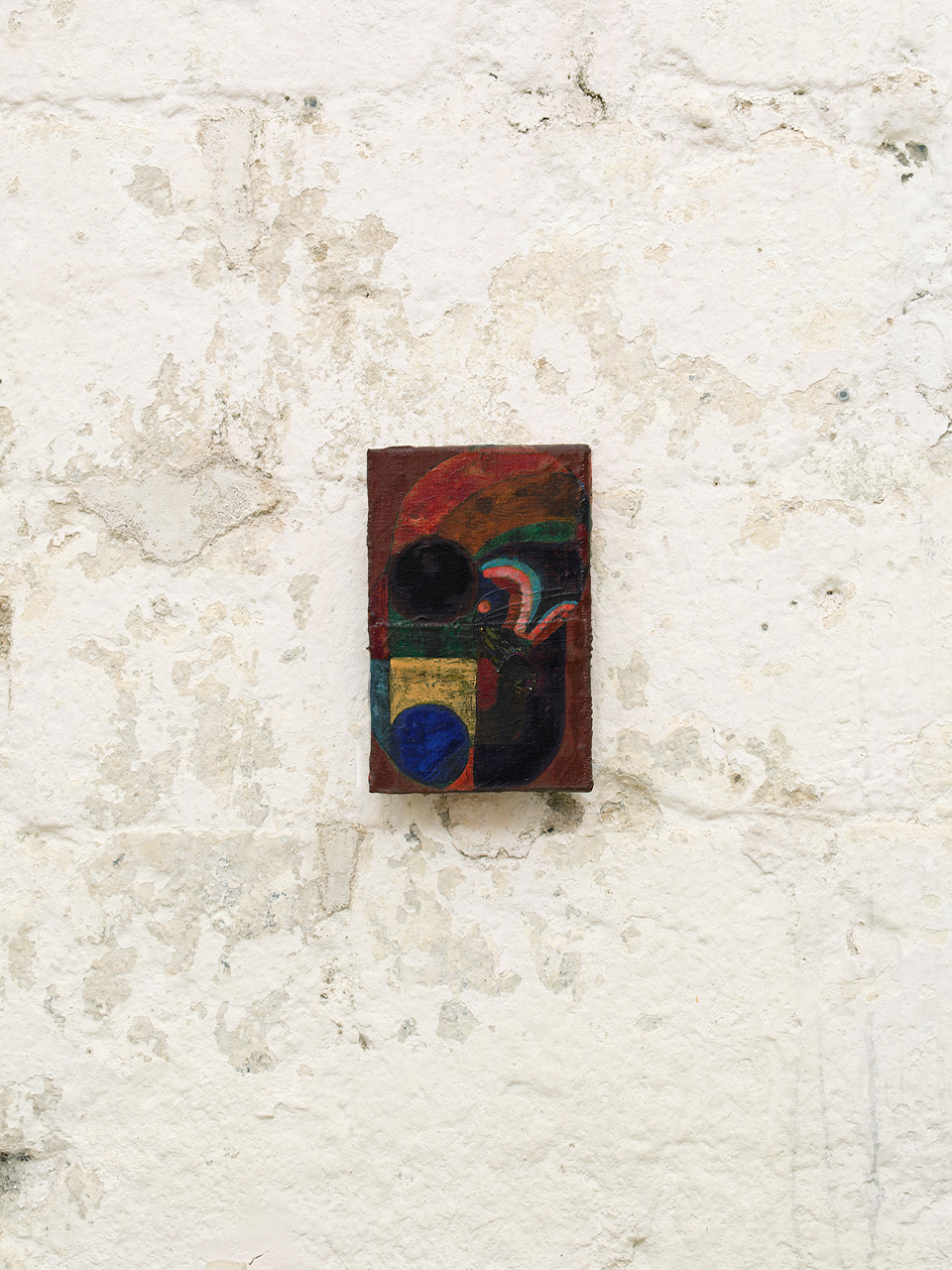
All along, however, I knew that some other quality is at play in Alexander’s pictures, too. Yes, he is attached to a certain kind of flatness that enables it to approach the objectivity of ornament. But his works are not, as icons, impersonal. Though I am aware that it is not Alexander’s personality that we see – his is surely not a form of expressionism – there is in the works a great sense of individual character.
This character comes not from the motif, which from the outset has been constructed from lines suspended within the confines of a grid, at once figure and pattern. Each line will go as far as it can, touching the nearest edge, alleviating many aspects of decision-making, or what we could call subjectivity in the work. The word religion means ‘to bind’, and so we might understand the formulaic nature of Alexander’s world of motifs as a form of confinement: a structure which allows what lies outside language and cognition to appear. I am talking about the accumulation of colour, texture, light, and the sense that we get from Alexander’s pictures that it is time – that most abstract of substances – that lends them their depth.
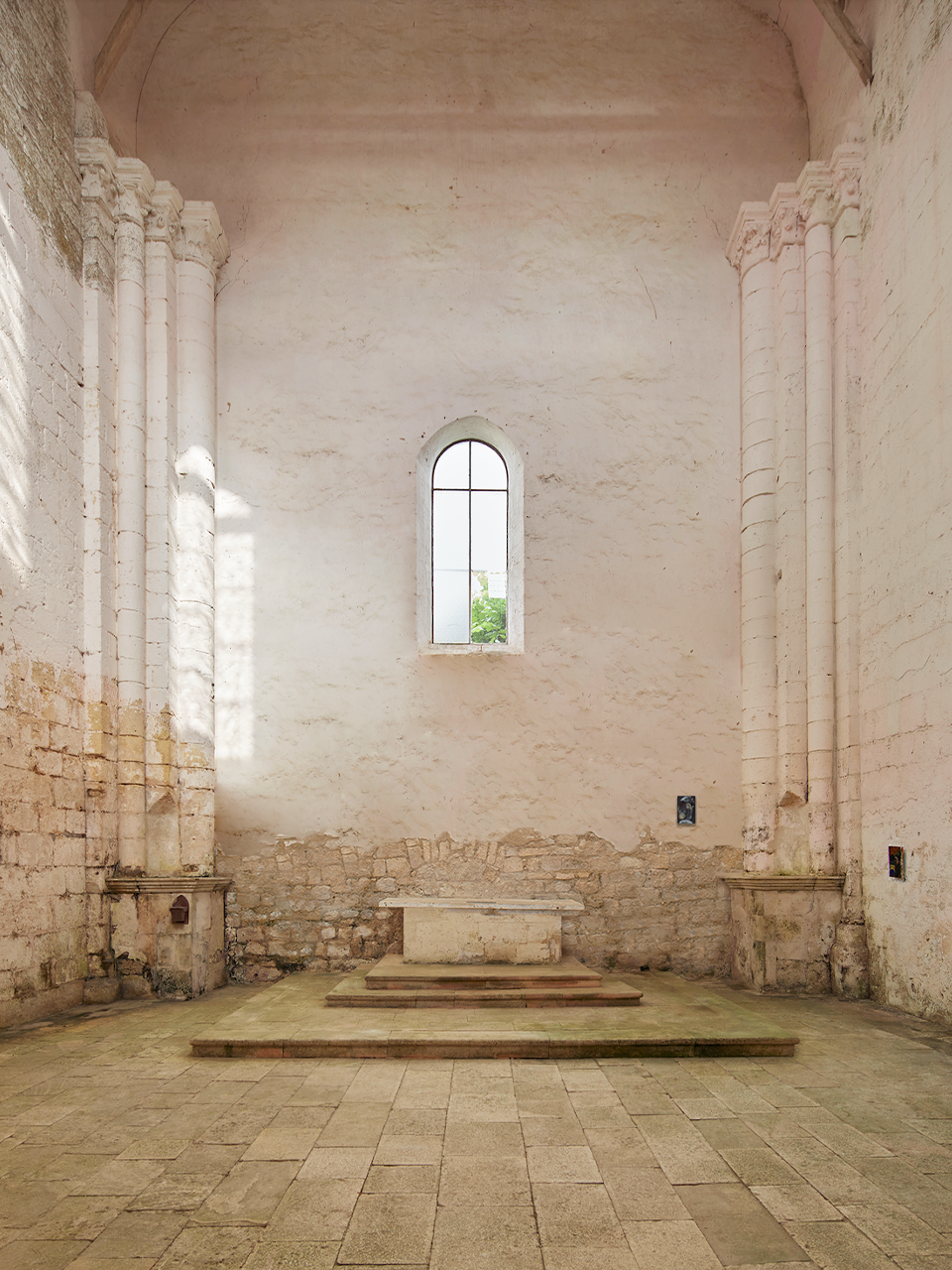
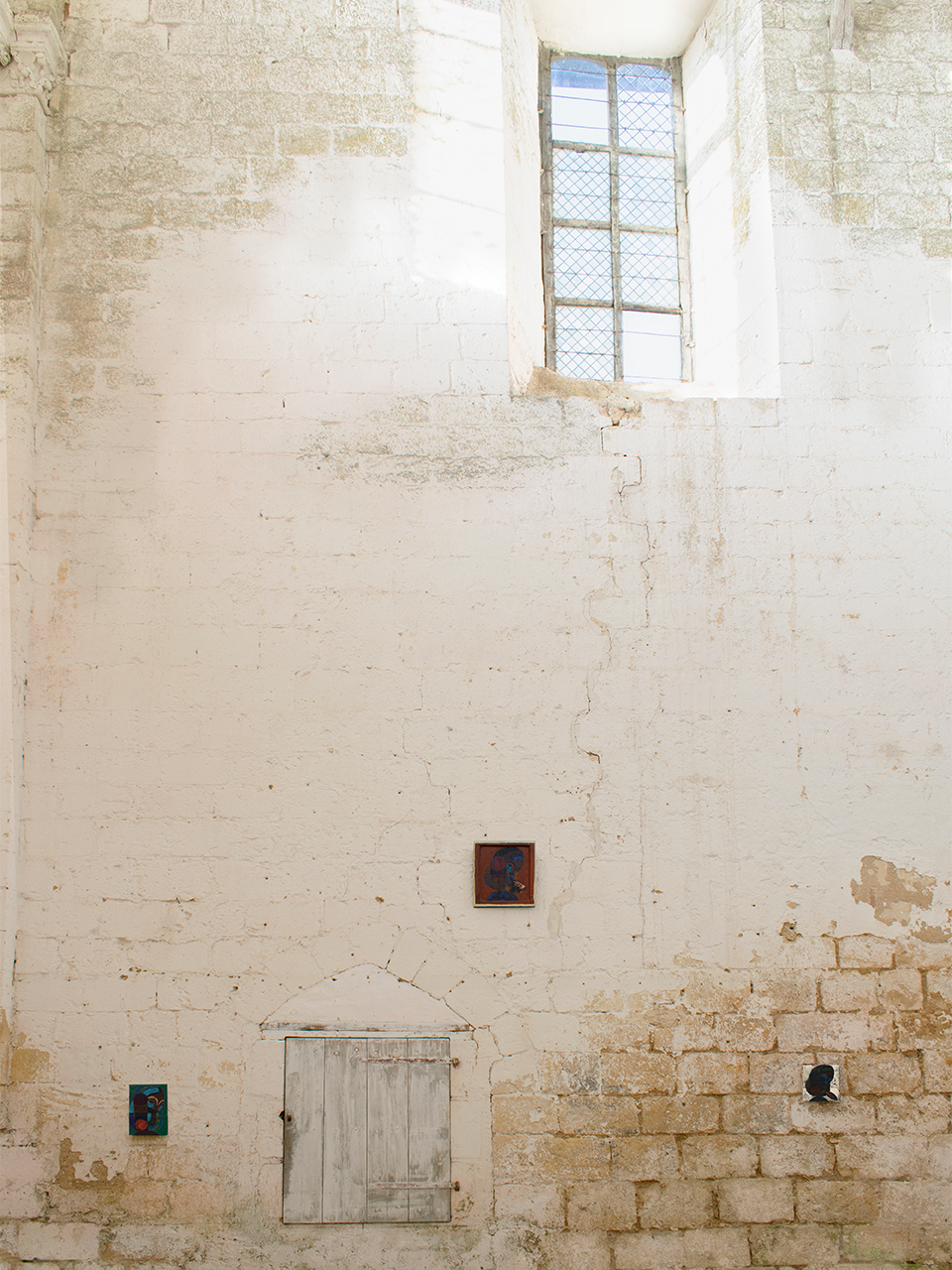
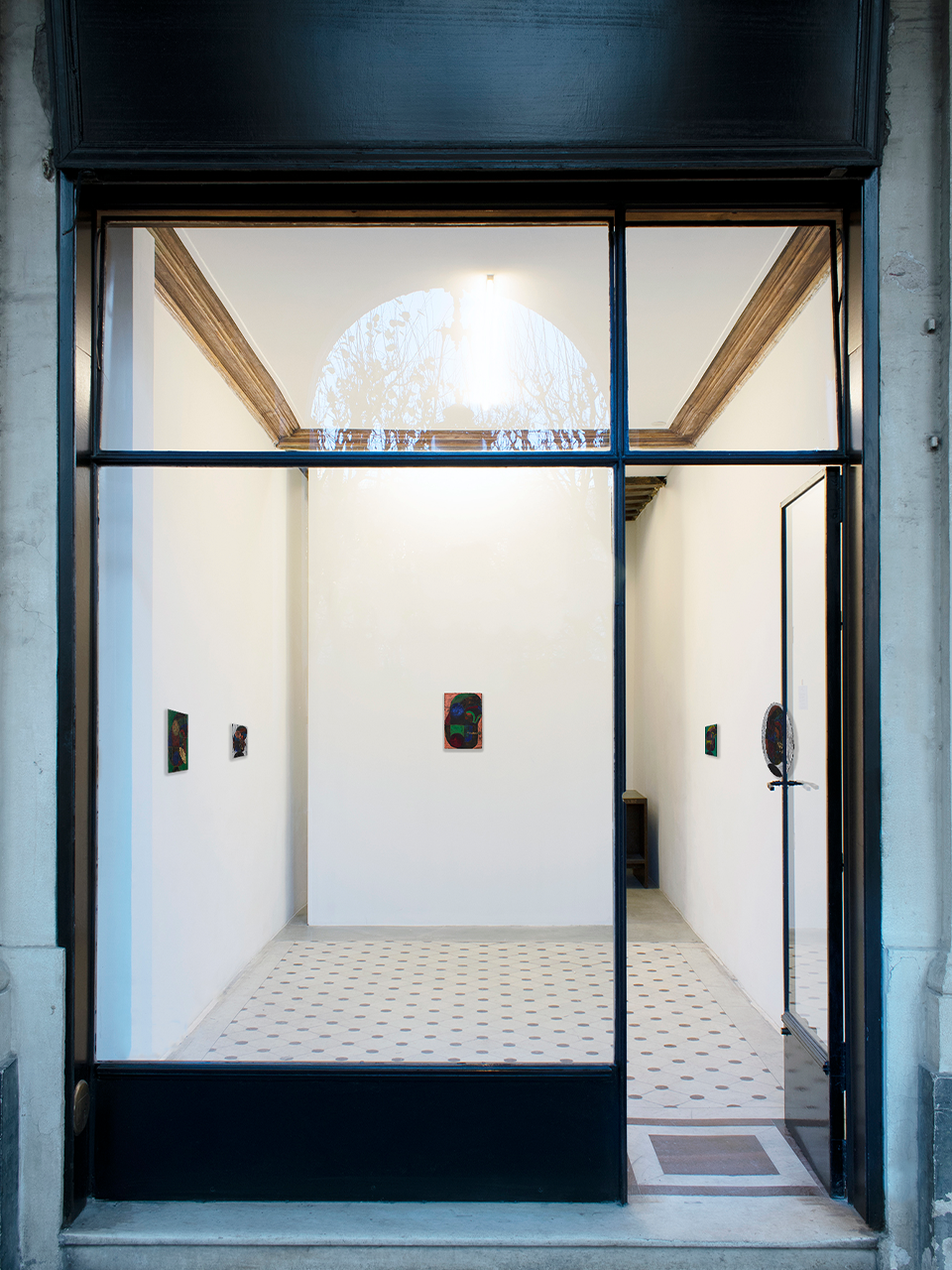
I knew this, and yet had not quite been able to grasp the consequences of it – as one rarely is able to grasp the consequences of an artwork’s physicality in advance of its impact in a space. I thought we might emphasise seriality and repetition by hanging the works in a straight line at shoulder height. It would be modernist and sober. It would add to the works the spirituality of mathematics – its infinity.
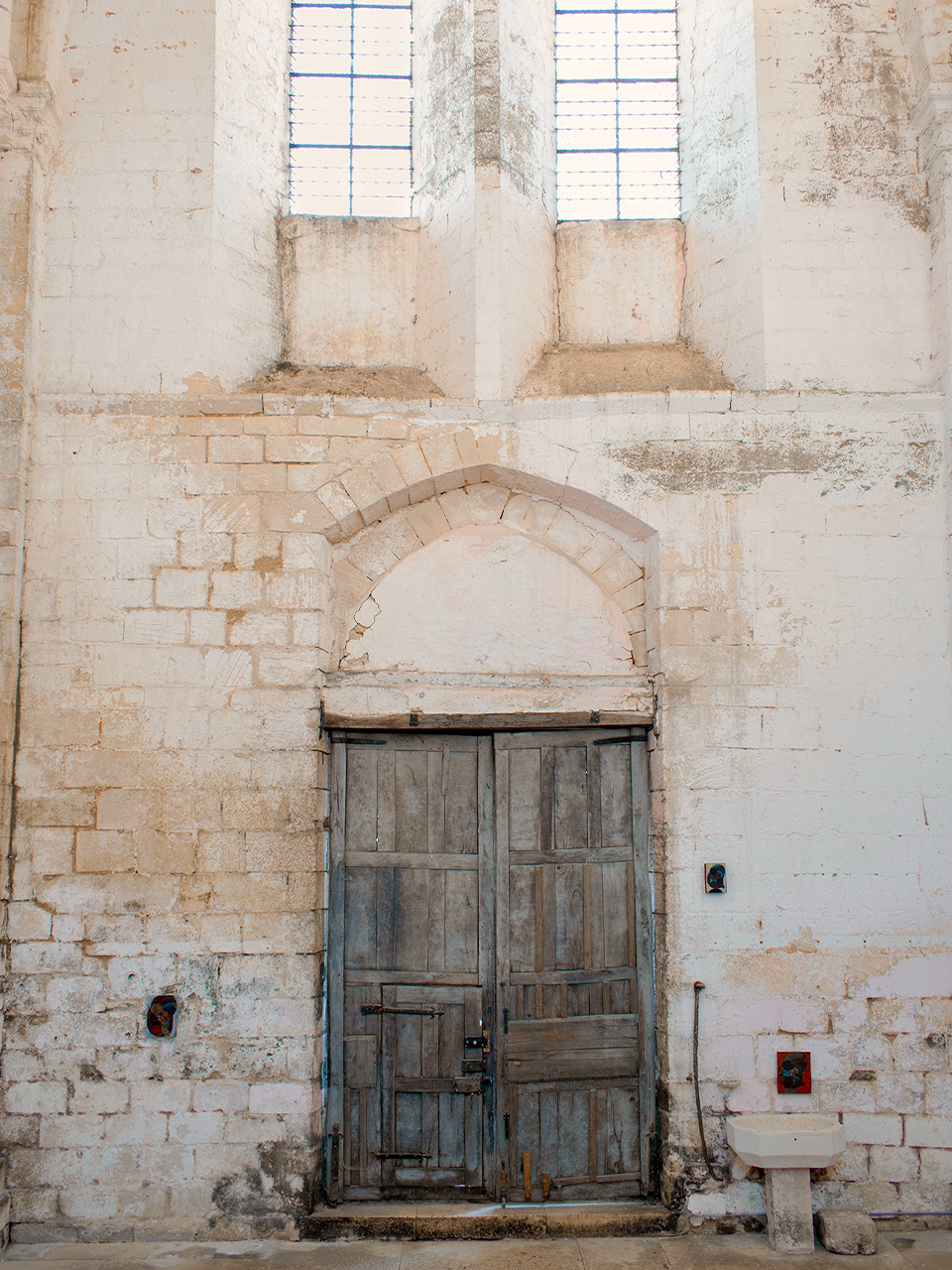
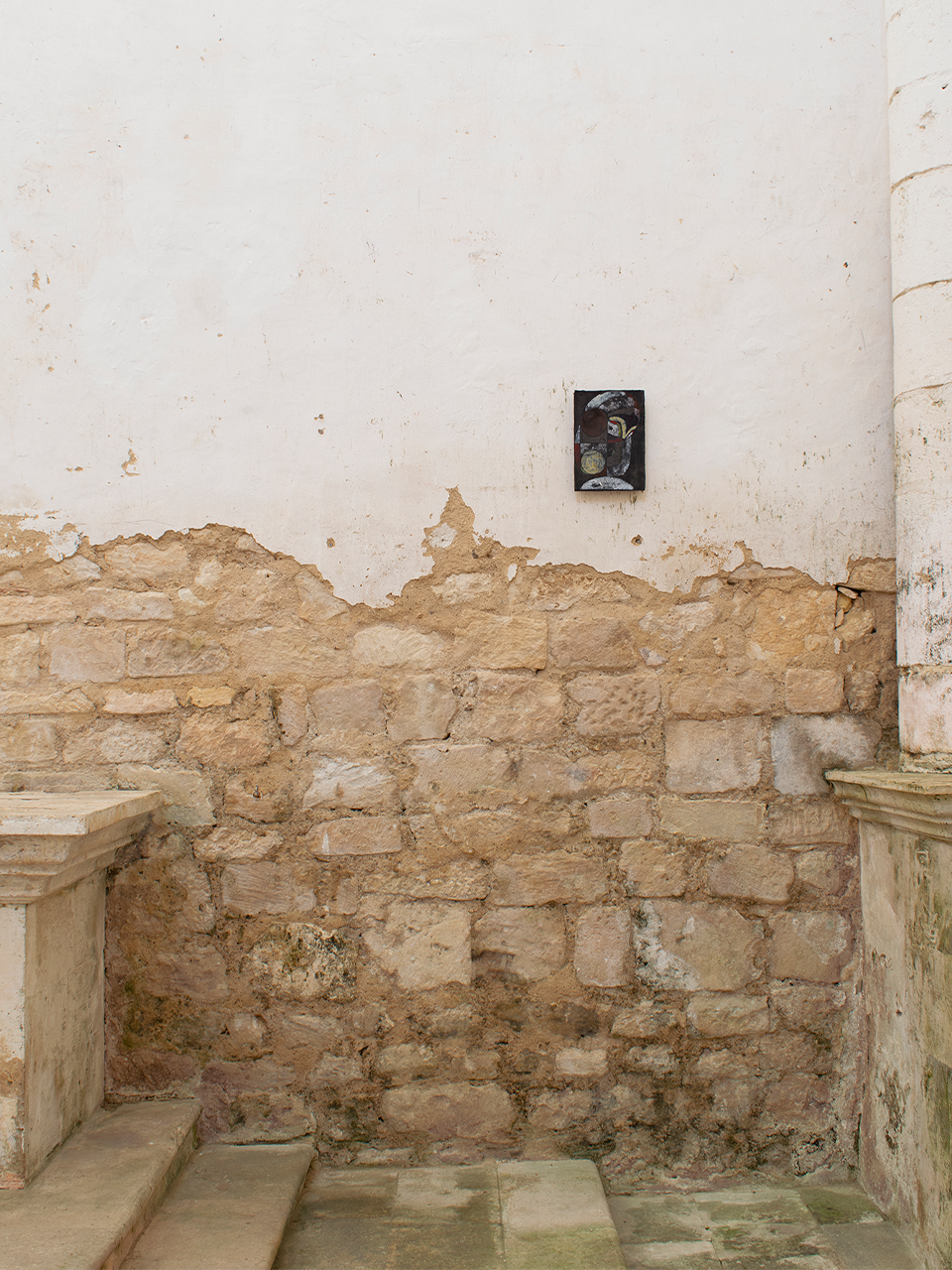
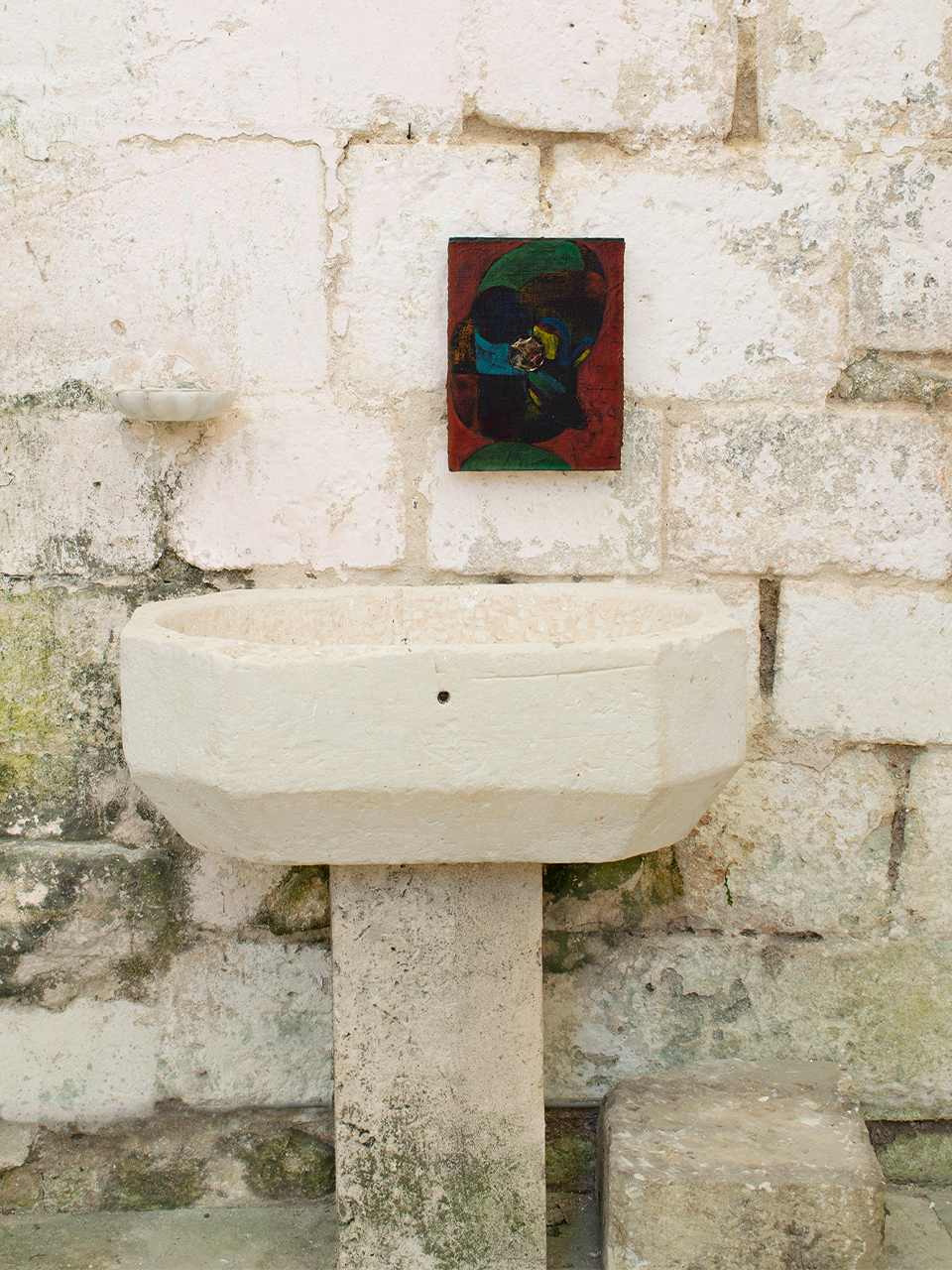
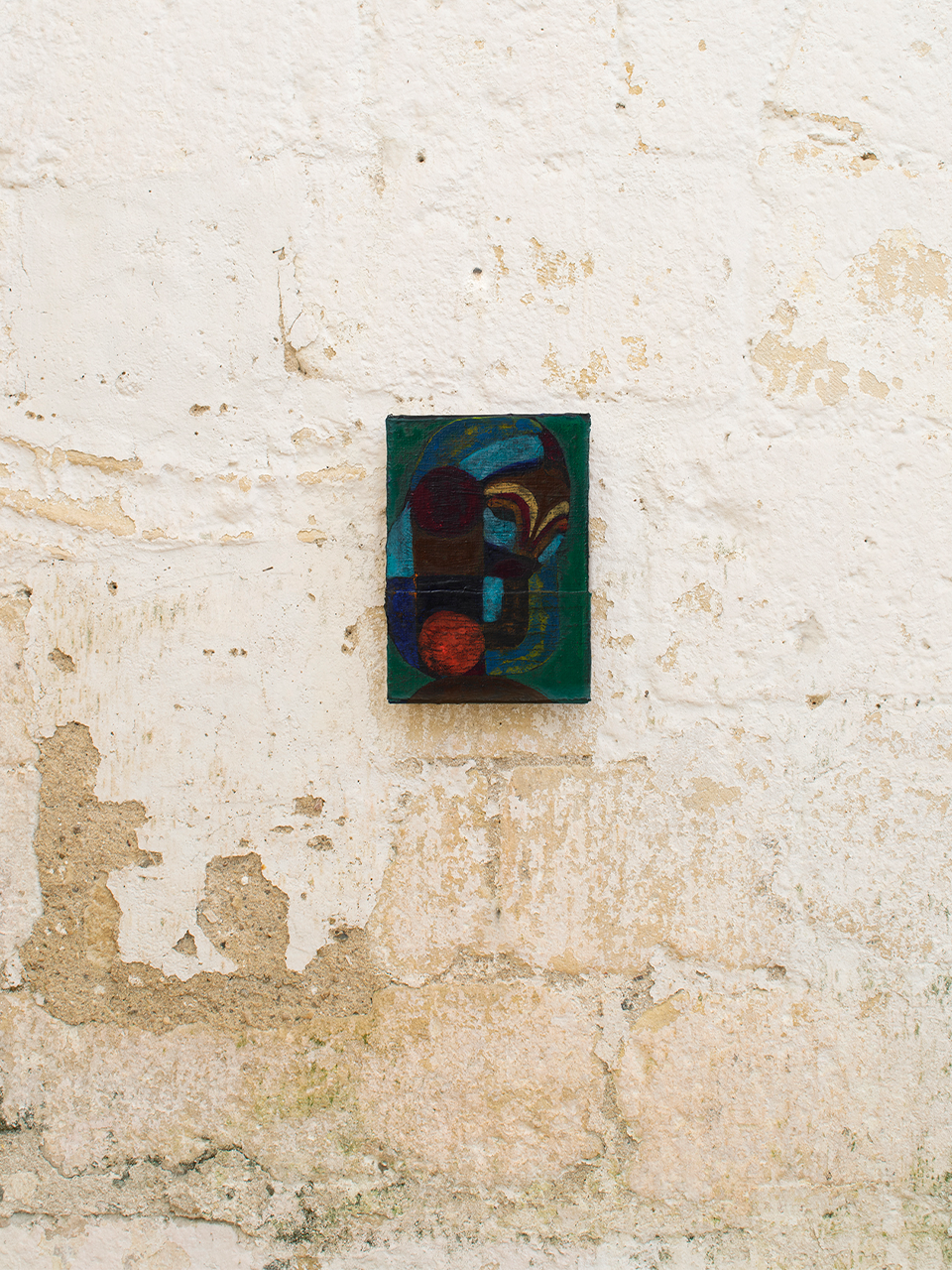
But as we unpacked the works, one by one, the reality of their characters impinged upon our agency. It would of course have been possible to enter into struggle with the works, and force them to align with our vision – but to what end? Each one, a meeting of body and light, demanded that it be met alone; that the viewer could come close; that the surrounding wall could join its picture plane. We used the nails that were already there, perhaps from previous projects, but also from long before Atrata. It was not difficult to imagine that the paintings had grown from inside the walls.
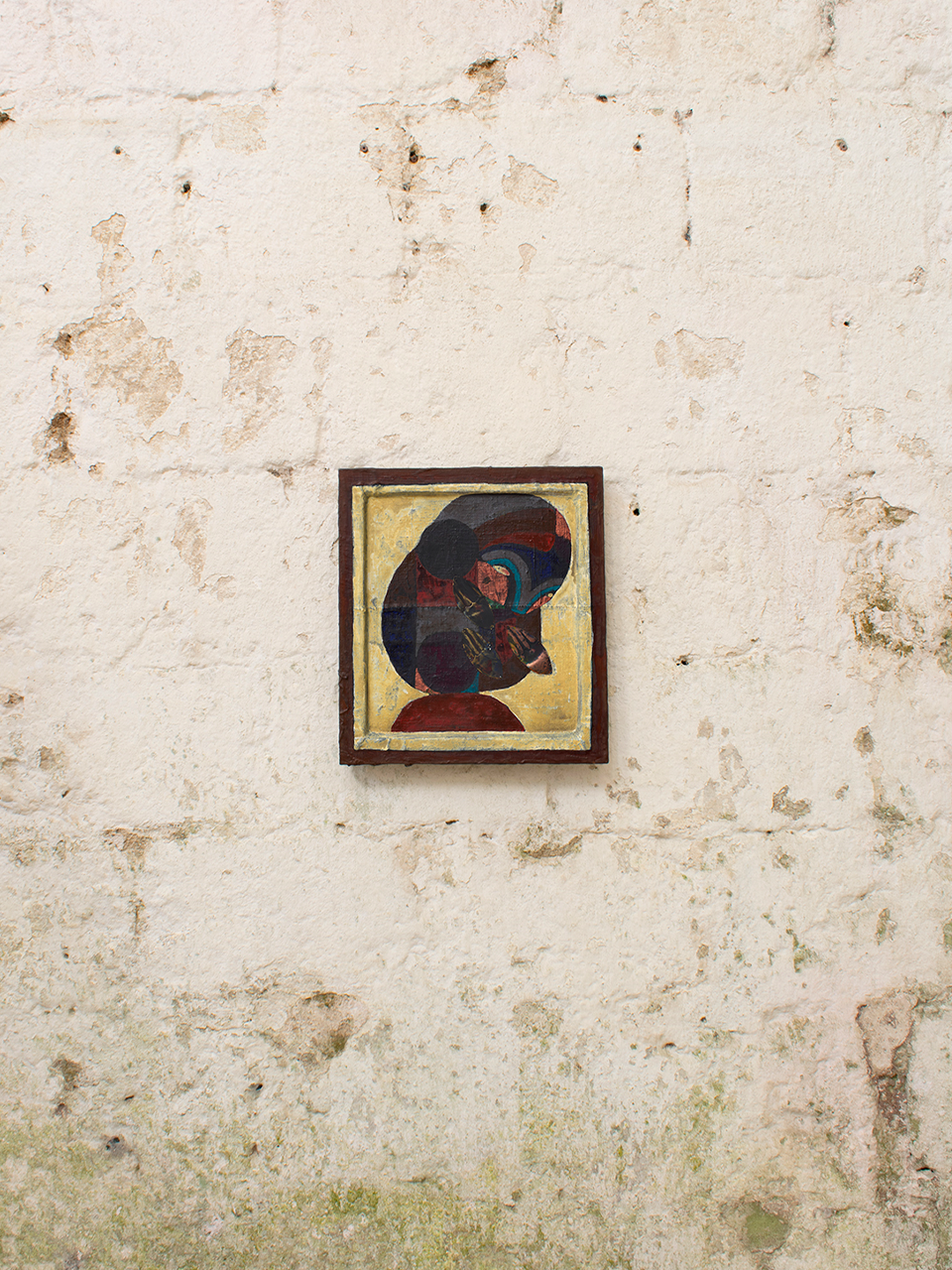
We had spoken about doubt, and Saint Thomas who went looking for certainty. The viewer will find on these pictures enough wounds and hands and fingers to verify what Thomas did not dare believe. And yet in the encounter with these works – in unwrapping them, one by one, and touching them – what I sense is not the alleviation of doubt, but its replacement with another kind of truth altogether, a glow emerging from beneath a dark surface, through the almond-shaped eyes of the small figure. And so the motion of doubt was opposite to what I had expected. It was not that the pictures would somehow express doubt, as Thomas had, but that their natural claim to truth would unsettle what it was I even thought I knew about it. There is a nail directly above the alter – of course there is. And the question of whether we would hang one of the icons there, seemed to phrase, once again, the question of doubt. In the end, it was impossible for us to make the decision.
Alexander Tovborg (b. 1983, lives and works in Copenhagen, Denmark) studied at the Staatliche Akademie der Bildenden Künste, Karlsruhe, Germany and the Royal Danish Academy of Fine Arts, Copenhagen, Denmark.
Painting, drawing, sculpture, and performance share equal space in Tovborg’s multidisciplinary practice that explores the roles that religion and mythology play in human identity.
His work was presented in numerous institutions, including : Camden Arts Centre, London, UK; Grand Palais, Paris, France; ARoS, Aarhus, Denmark ; Kunsthal Charlottenborg, Copenhagen, Denmark ; Museet for Religiøs Kunst, Lemvig, Denmark ; Museet for Samtidskunst, Roskilde, Denmark ; Kunsthalle Bremen, Bremen, Germany ; AKEN, Copenhagen, Denmark ; Holstebro kunstmuseum, Holstebro, Denmark ; KØS museum for kunst i det offentlige rum, Køge, Denmark ; Spritmuseum, Stockholm, Sweden ; Vejen Kunstmuseum, Vejen, Denmark ; IMMA Irish Museum of Modern Art, Dublin, Ireland ; Museo Nacional de la Estampa, Mexico City, Mexico ; Kunsthallen 44 Møen, Askeby, Denmark ; Kunstmuseet Køge Skitsesamling, Køge, Denmark ; Odsherred Kunstmuseum, Asnæs, Denmark ; Herning Museum of Contemporary Art, Herning, Denmark ; Hundige Kunsthal, Hundige, Denmark ; Randers Kunstmusem, Randers, Denmark.
Alexander Tovborg
THOMAS
Chapter 2
12 May – 6 June
Villa Atrata
30 galerie de Montpensier, Jardin du Palais Royal
Thomas is a two-part exhibition by Danish artist Alexander Tovborg. The first chapter is on view in Angles-sur-l’Anglin, while the second is presented in Paris. For his first solo exhibition in France, Alexander Tovborg has created a new series of icons, accompanied by texts by Kristian Vistrup Madsen.
Thomas is the name of the incredulous, the one who responded to Christ’s return with a question: can I touch it?
“It” being the wound.
“It” being everything, and at the same time always the wound.
To this question, Jesus answered by leading Thomas’s hand to the wound. The wound, in that way, is the site of faith. For what is faith if not a form of doubt management? A framework for the questions that cannot be answered but which keep announcing themselves nonetheless? And we have seen how, in Caravaggio’s picture, the finger went all the way inside, the scene lit up by that painter’s characteristic white light, like a torch.
In western Christianity this is what Jesus did: he provided evidence to the one who needed it. This is also why there is, in the western Christian tradition, a special emphasis on the sex of Christ, and on his suffering: the pleading eyes, the wound that drips graphically from his side down to the crotch – to provide evidence that he was, indeed, not only human but a man; that he really did die and come back to life.
In the Orthodox tradition, the story of Thomas is less about the hand that was moved to touch the wound than about what Jesus said next: blessed are the ones who have not seen the wound – who have not touched it – and still believe. The orthodox believer needs no evidence; their faith is confessed – in the instance of practice, already resolved. This is why, in Orthodox pictures, the figures are restrained and impersonal, not evocative and persuasive, and why Thomas’s act of incredulity tends to be shown from a distance, not, like Caravaggio’s, in medium close-up.
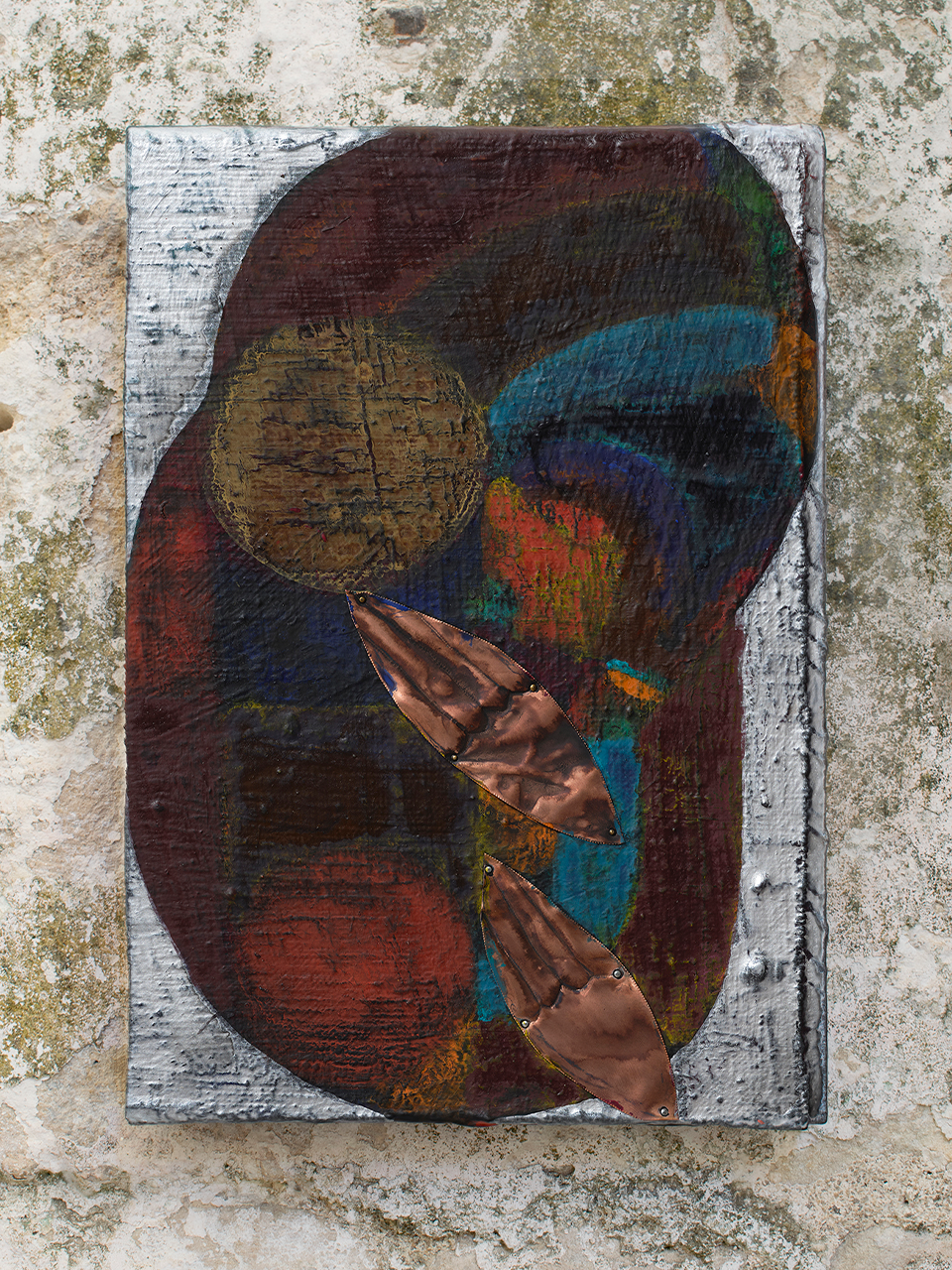
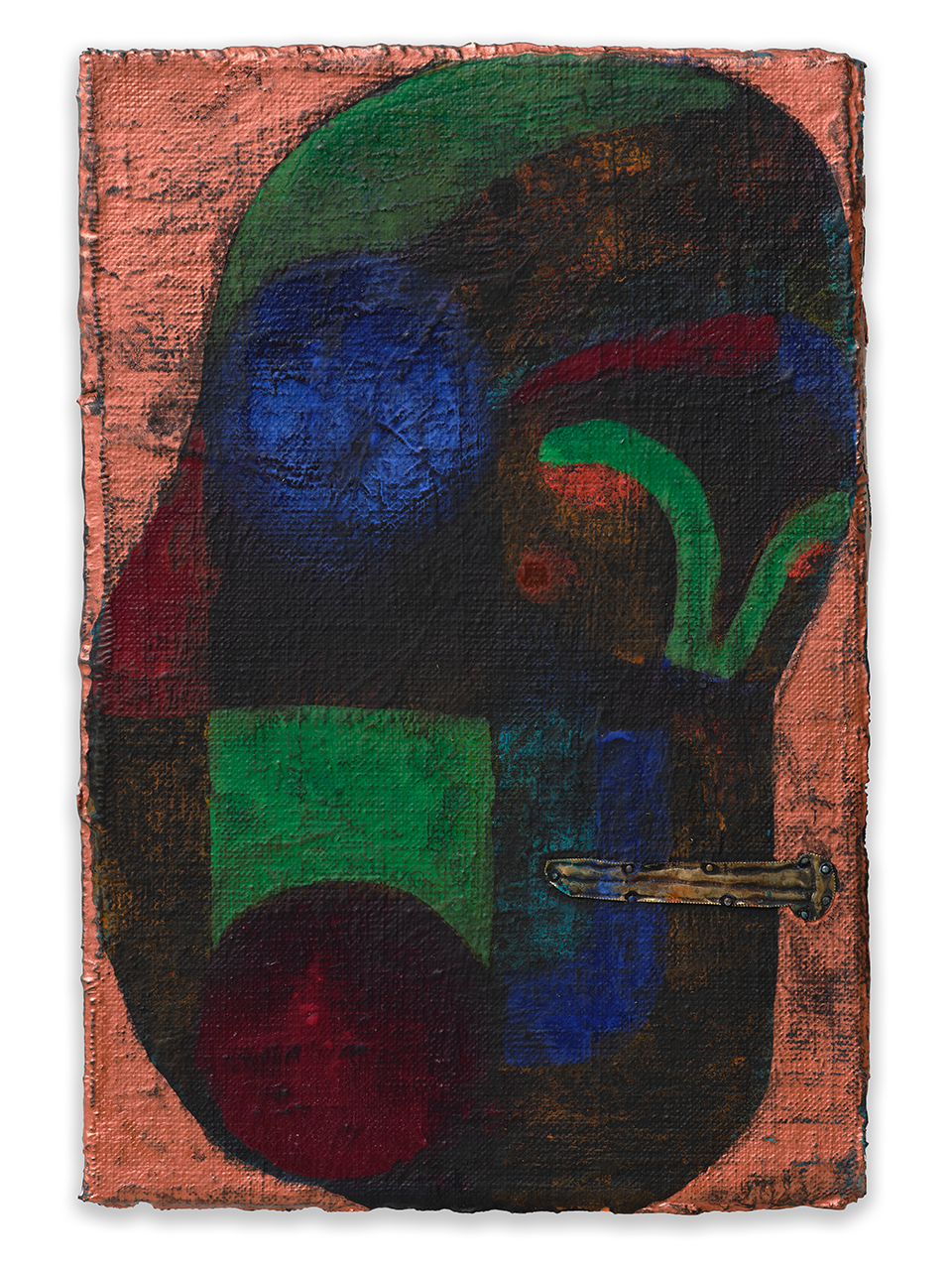
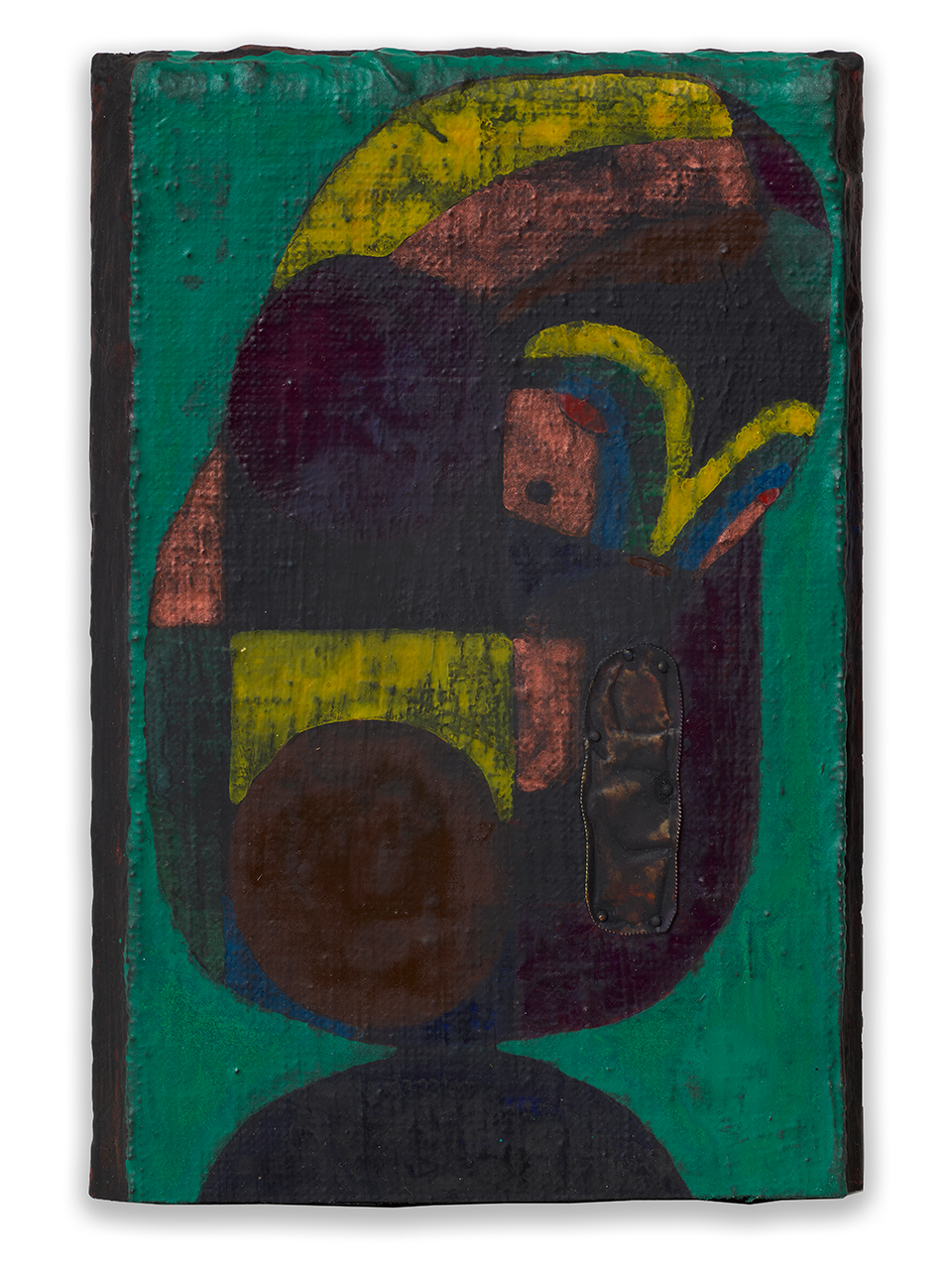
We can understand this suite of works by Alexander Tovborg as icons: repetitive, even formulaic. We can think of each of them as a prayer, a question formulated again and again without the expectation of an answer, though some kind of knowledge, with each one, slowly emerges from out of the depths.
We can understand this suite of works as icons, and yet something manifests in them that goes beyond the impersonal restraint typical of the Orthodox pictorial tradition: something is undeniably there, flesh-like and full of character, murky and multifarious. Far are they, in any case, from expressions of resolve.
Their title, simply, is T – and it is from this T that I extrapolate THOMAS, careful not to add his usual moniker of Saint. Because T is so short, a mere sound, and we need further enunciation to be able to speak about doubt. But it is not Thomas that we see in these paintings, and neither is it Jesus. What we see is a figure, a simple form, with barely any indexical features. Some of them are dark, as if charred. Others glow from within. Each will phrase the question in their own way, though none, of course, answer.
In some we see a hand, almond-shaped. In others, a finger. In some the hand is flanked by its negative space, the wound, and a striking proposition takes the almond shape: the hand is the wound. For a moment, this much is clear. That the very impetus to touch – that is, to doubt – is where suffering is located in humans, and doubt, as we know, shares this location with faith.
Within this collapse of difference – between hand and wound, Jesus and Thomas – there is suddenly also no difference between touching and not having touched; between evidence and confession, faith and knowledge. We are, perhaps, in a kind of preternatural state where wound, doubt and desire are always-already* as well as not-yet. Where the famous question has not been asked, but there is also no need to. Noli me tangere** said Jesus, but what could he possibly mean? Here Thomas is not Saint, he is not yet even Thomas. He is T, a sign remarkably like the cross, though simpler. A sign that takes its shape after the human body.
* English translation of « immer schon ».
« Always-already » is a philosophical term describing what is already in place before any experience or thought, without a clearly identifiable beginning. It was notably developed by Martin Heidegger in Being and Time (1927).
** Noli me tangere (‘Touch me not’) is the Latin version of a phrase spoken by Jesus to Mary Magdalene when she recognised him after his resurrection (John 20:17).
Alexander Tovborg (b. 1983, lives and works in Copenhagen, Denmark) studied at the Staatliche Akademie der Bildenden Künste, Karlsruhe, Germany and the Royal Danish Academy of Fine Arts, Copenhagen, Denmark.
Painting, drawing, sculpture, and performance share equal space in Tovborg’s multidisciplinary practice that explores the roles that religion and mythology play in human identity.
His work was presented in numerous institutions, including : Camden Arts Centre, London, UK; Grand Palais, Paris, France; ARoS, Aarhus, Denmark ; Kunsthal Charlottenborg, Copenhagen, Denmark ; Museet for Religiøs Kunst, Lemvig, Denmark ; Museet for Samtidskunst, Roskilde, Denmark ; Kunsthalle Bremen, Bremen, Germany ; AKEN, Copenhagen, Denmark ; Holstebro kunstmuseum, Holstebro, Denmark ; KØS museum for kunst i det offentlige rum, Køge, Denmark ; Spritmuseum, Stockholm, Sweden ; Vejen Kunstmuseum, Vejen, Denmark ; IMMA Irish Museum of Modern Art, Dublin, Ireland ; Museo Nacional de la Estampa, Mexico City, Mexico ; Kunsthallen 44 Møen, Askeby, Denmark ; Kunstmuseet Køge Skitsesamling, Køge, Denmark ; Odsherred Kunstmuseum, Asnæs, Denmark ; Herning Museum of Contemporary Art, Herning, Denmark ; Hundige Kunsthal, Hundige, Denmark ; Randers Kunstmusem, Randers, Denmark.